
Top 10 Shopping Trends in America for 2026
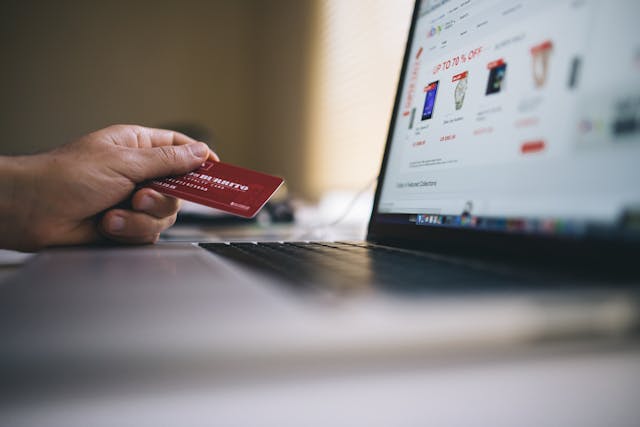
The way Americans shop has always evolved — but lately, it feels less like evolution and more like a complete reinvention.
Two years ago a lot of us were already buying things on our phones. Now people shop on live streams. They let computers choose what they want to buy. Some people even split their grocery bills into payments, with no extra charges. The place where you buy things is not one spot anymore. Buyers are really smart now. They get easily distracted. It is hard to get them to choose what you are selling. These changes are shaping the top 10 shopping trends in America for 2026
Whether you are a store owner trying to stay a marketing person changing plans or just someone who wants to know what is coming next. The top 10 shopping trends in America for 2026 show an interesting view of how we shop, what we want and what brands must do to get our money.
What’s Fueling the Shift in American Consumer Behavior?

Here is the situation: the United States e-commerce market is growing fast. The total value of retail e-commerce sales is going to be around six point eight eight trillion dollars in the year twenty twenty six. This is an increase of seven point two percent from the previous year. These numbers clearly reflect the top 10 shopping trends in America for 2026.
The United States has a lot of people who shop online with two hundred ninety five point four million online buyers, which is the second largest market, in the world.
But raw spending growth isn’t the headline. The real story is how people are shopping — the channels, tools, expectations, and values have all shifted at once. These ten trends capture exactly where American retail is heading and highlight the top 10 shopping trends in America for 2026.
1. AI-Powered Shopping Is Now the Experience, Not Just a Feature
Of all the forces reshaping American retail, artificial intelligence is the most transformative — not because it’s flashy, but because it’s genuinely working.
Nearly half of Americans in 2025 said AI recommendations influenced their shopping purchases. A third of U.S. Shoppers used ChatGPT before making a purchase. Traffic to sites from search engines that use AI jumped 4,700% compared to the previous year, as of mid-2025 according to Adobe data.
Shoppers are now asking AI tools things like “find me a waterproof hiking boot under $150 with great reviews” and getting curated answers — bypassing brand websites entirely. More than 30% say AI speeds up the shopping process. For brands, product visibility now depends on whether your data is accurate enough for AI engines to recommend you — not just whether you rank on Google.
2. Social Commerce Has Grown from Buzzword to Billion-Dollar Channel
Social commerce has finally arrived in America — for real this time.
People think that about 74 million Americans will buy things on Facebook in 2026. Instagram and TikTok Shop are also getting more popular. A lot of people in the United States are already using commerce to shop online. In fact 40 percent of people who shop online in the US have tried it.. 78 Percent of people say that what they see on social media helps them decide what to buy especially when it comes to fashion and beauty. Facebook is still really popular, for shopping and Instagram and TikTok Shop are growing fast.
Livestream shopping is where the conversion numbers get striking: 10% to 30% conversion rates versus the 1% to 3% typical of traditional e-commerce. Gen Z is 1.6 to 1.7 times more likely to buy through a livestream than through a standard product page. This isn’t influencer marketing in new packaging — it’s a fundamentally different discovery model built on trust, entertainment, and immediacy, making it one of the top 10 shopping trends in America for 2026.
3. Mobile Commerce Is the Default, Not the Fallback
If your brand still treats mobile as secondary, you’re already behind.
76% of U.S. adults shop online via smartphone, rising to 91% of adults aged 18 to 49, according to Pew Research. Smartphones accounted for 56.4% of all U.S. online holiday transactions heading into 2026. And 65% of shoppers compare prices on their phone while standing in a physical store — mobile has made every consumer simultaneously an in-store and online shopper.
In 2026, a clunky mobile experience doesn’t just lose a sale. It loses a customer.
4. Buy Now, Pay Later Has Gone Mainstream
BNPL services like Klarna, Afterpay, and Affirm have moved from niche to expected.
43% of Millennials and Gen Z consumers use BNPL, per J.D. Power. U.S. BNPL spending hit approximately $20 billion during the 2025 holiday season, up nearly 10% year-over-year. The global market is projected to grow from $28 billion to $83 billion by 2034.
For shoppers, it’s straightforward: buy without credit card interest. For retailers, offering BNPL means larger cart sizes and fewer checkout abandonments. What’s changed in 2026 is that BNPL is no longer a “young shopper” thing — it’s becoming a general checkout expectation. Retailers that don’t offer it are actively losing sales, which is why it has become one of the top 10 shopping trends in America for 2026.
5. Sustainability Has Crossed from Preference to Purchase Driver
American consumers have said they care about sustainability for years. Now they’re acting on it.
Most people, in the United States seventy two percent of consumers are buying sustainable products now. Sixty one percent of consumers say that eco-friendly packaging is a factor when they are deciding what to buy.
A large number of consumers eighty percent are more likely to trust companies that can show proof that they are really working on sustainability. Companies can not just say they are being green they need to show data to back up what they say about sustainability.
The loyalty research confirms this result: the repeat purchase rates for brands with ESG-style of business/brand alignment is 32-34%, compared to less than 30% for comparable brands not implementing these values. By 2026, shoppers will have done their homework regarding product claims, certifications, etc., and will not accept misleading claims about being sustainable through marketing only. Sustainability needs to come from the product itself, not merely as a marketing component of a sustainable product.
6. Augmented Reality Is Transforming How People Decide to Buy
Virtual try-ons have moved well past novelty status.
More than 90% of Americans currently use or would consider using AR for shopping, with the market growing over 40% year-over-year — heaviest in fashion, beauty, and home goods. Forty percent of shoppers say they’d pay more for products they tested via AR before buying.
The logic is simple: AR removes the hesitation that comes with buying something you can’t physically inspect. Seeing exactly how a couch fits your living room — or whether those sunglasses suit your face — dramatically reduces return rates and abandoned carts. For furniture and apparel brands especially, AR is fast becoming a competitive necessity and one of the top 10 shopping trends in America for 2026.
7. Hyper-Personalization Is Raising the Bar on Every Interaction
Generic email blasts and homepages that try to fit everyone are becoming a thing of the past. American consumers, in 2026 want experiences that are built for them not some general solution. They expect things to be made specifically for their needs.
AI and behavioral data are now combining to power dynamic storefronts, personalized pricing, curated loyalty drops, and real-time recommendations. 22% of shoppers already use AI search tools to research new products and brands, per Salsify’s 2026 Consumer Research report. They use these tools precisely because AI gives them personalized, efficient answers rather than generic search pages.
The thing is, personalization only really works when people trust what is happening with their information. Companies that are honest about what they do with data and actually use it to make things better, for the consumer. Of just sending them a lot of advertisements. Are getting people to like them more. Companies that do not use data in a way are losing peoples interest very quickly. This shift in consumer trust is becoming one of the top 10 shopping trends in America for 2026.
8. Omnichannel Is Finally Living Up to Its Promise
For years, omnichannel was more buzzword than reality. In 2026, physical and digital retail are genuinely working together.
The modern shopper journey is wild: discover a product in-store, research it on Amazon, test it via AR, check TikTok for social proof, ask AI for a final recommendation, then buy online for curbside pickup. That’s not hypothetical — that’s a Tuesday. Retailers like Walmart have responded by integrating same-day delivery, curbside pickup, and TikTok Shop partnerships, while deploying in-store “endless aisle” kiosks that let customers order online-only items on the spot. This perfectly reflects the top 10 shopping trends in America for 2026.
Even mall foot traffic is ticking back up — indoor mall visits rose 1.8% in the first half of 2025, with visit duration up 3.3%. Physical retail isn’t dying. It’s evolving into a complement to digital, not a competitor.
9. Checkout Has Become a Competitive Differentiator
The checkout experience is no longer just a transaction endpoint — it’s a brand statement.
Digital wallets now account for 54% of all online payments worldwide, surpassing cards as the most common method. In 2026, seamless one-click purchasing, integrated Apple Pay and Google Pay, BNPL options, and transparent pricing (no hidden fees) aren’t nice-to-haves. They’re table stakes. Every extra form field, every surprise charge, every slow-loading payment page is a conversion that never recovers.
Brands winning at checkout treat it as a product — something designed, tested, and optimized continuously.
10. Gen Z and Gen Alpha Are Rewriting the Consumer Rulebook
Two generations are simultaneously reshaping what American retail looks like — and both operate by completely different rules.
42% of Gen Z shoppers say they mostly shop online, and they comparison-shop across multiple tabs in seconds. They’ve fueled “dupe culture” — 16% have purchased a cheaper alternative to a luxury product after seeing it promoted online. Price transparency isn’t a preference for Gen Z; it’s non-negotiable.
The first generation of children who have grown up exclusively with sophisticated technologies (Gen Alpha) is starting to shape family buying habits and will become an independent buying group in a very short period of time. The early indicators for this generation are even stronger than any previous generation, with more people demonstrating values consistent with sustainability, adopting a digital native mindset, and craving greater levels of inclusivity.
Building loyalty with both groups needs partnerships, with creators, honest brand values, easy mobile experiences and personalization that respects privacy. Traditional advertising does not really work anymore in the era of the top 10 shopping trends in America for 2026.
Quick Wins: What to Do with This Right Now

Optimize product data for AI discovery — visibility is shifting beyond Google
Build or grow a social commerce presence native to each platform, not repurposed web content
Treat mobile UX as your primary channel, not a secondary afterthought
Add BNPL at checkout — especially if you’re targeting shoppers under 45
Make sustainability claims specific and verifiable, not vague or decorative
Simplify checkout relentlessly — fewer steps, more payment options, zero surprise fees
Conclusion
According to the top 10 shopping trends in America for 2026 ; consumers are looking to gain more control over what they purchase, how they spend their money, and their shopping experiences will be tailored specifically to them. Through Artificial Intelligence (AI), Augmented Reality (AR), and Social Media, shoppers are now able to take more intelligent shopping decisions than before and as such expect retailers to fulfil those expectations.
The roadmap is clear. Brands that genuinely build for these shifts — rather than just check them off a list — will own the next decade of American retail.
FAQs
What is the biggest shopping trend in the U.S. in 2026?
AI-powered shopping. It’s actively influencing nearly half of American consumers’ purchase decisions — and reshaping how products get discovered before shoppers ever visit a brand website.
How big is the U.S. e-commerce market in 2026?
The U.S. has approximately 295.4 million active online buyers. Online purchases now represent 21.8% of all U.S. retail sales — the highest share ever recorded.
Yes. Around 74 million Americans are projected to shop on Facebook alone in 2026. TikTok Shop is growing rapidly, and 40% of U.S. online shoppers have already tried live commerce.
How popular is BNPL in the U.S.?
Very. 43% of Millennials and Gen Z use BNPL regularly, and U.S. holiday BNPL spending hit $20 billion in 2025. It’s moved from alternative to expected checkout option.
Do American shoppers actually buy based on sustainability?
Increasingly yes — and they’re fact-checking. 72% say they’re buying more sustainably, and 80% want brands to prove claims with real data, not just marketing language.

