
How Social Media Is Changing Democracy in America
How social media is changing democracy in America. This is not something that only people who study politics or people who work in Silicon Valley are talking about. People are talking about this at their kitchen tables at schools and at town hall meetings over the country. We see this when something on Twitter becomes news and someone loses their job because of it.
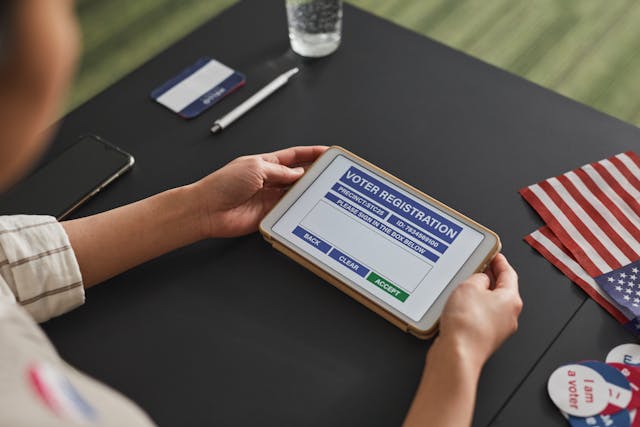
We also see this when a video on TikTok helps register a lot of voters in a short amount of time. Social media is changing the way Americans participate in their government. Social media is changing democracy in America. This is a big deal. Whether or not you think this is a thing probably depends on what you see when you use social media. Social media is changing democracy in America. People have different opinions about it.
The New Town Square: Where Politics Lives Now

Back then, people waited for the nightly TV report or the weekend newspaper to catch up on politics. Seems ancient now, doesn’t it? These days, places like Facebook, Instagram, X – once called Twitter – along with YouTube and TikTok shape how opinions form and spread. News moves fast there, often messy, always loud. A study by Pew shows over fifty percent of American grown-ups pull headlines from social feeds now and again. Younger ones, especially those below thirty, turn to these apps even more.
This change is really important. The people who used to be in charge. Editors and news anchors and people who run political parties. Do not get to decide what people see and hear anymore. Now anyone with a smartphone and internet can suddenly become famous start a movement or completely change what people think about something in just a few hours. This new way of doing things is really great in a lot of ways. Groups of people who nobody used to pay attention to can now be heard. People who want to make changes, in their community can work together without spending any money on ads. Voters can talk to the people they elected to represent them.
Openness that helps people also puts them at risk. The story of how social media is changing democracy in America is a story with two sides. Social media and democracy are changing together. America is seeing changes because of social media.
Voter Engagement: The Double-Edged Sword
Let’s start with the good stuff, because there genuinely is a lot of it.
Social media has really changed the way people vote. It is amazing to think about how different things were twenty years. The elections in 2018 and 2020 had a lot of people voting and social media was a big part of that. Organizations used Instagram stories and Snapchat to remind Americans to sign up to vote. Some candidates even used Instagram Live. A lot of people watched. The social media movements like Media and the #BlackLivesMatter movement and the #MeToo movement did not just get a lot of attention they also made lawmakers, across the country listen to what people were saying. Social media really helped people get involved in voting. It made a big difference.
How social media is changing democracy in America is visible every single election cycle now. Donation drives go viral. Volunteer recruitment explodes on Facebook groups. Get-out-the-vote content reaches communities that traditional campaigns often overlooked. In Georgia’s 2021 Senate runoffs, social media organizing — especially in Black communities — was widely credited as a decisive force.
There’s something strong about that. Democracy should let everyone join in, and social media has made it easier to participate. You do not have to go door-todoor or go to a meeting to be involved in politics anymore. You can share your thoughts leave a comment give money and plan events, from your home at midnight. It actually makes a difference, and that is exactly how social media is changing democracy in America.
The Misinformation Machine
Now for the harder conversation.

The same system that helps voters find candidates also helps conspiracy theories reach people who want to believe them. Misinformation on media is not a mistake, in the way our country is run. It is now a regular part of the system, and this is another example of how social media is changing democracy in America. Social media platforms have tried to deal with this problem. They have not been very successful. The social media platforms have struggled to fix the issue of misinformation and in cases they have failed to make a real difference.
The 2016 election was the first true reckoning. Russian-linked accounts flooded Facebook, Twitter, and YouTube with divisive content designed not necessarily to elect any specific candidate, but to sow distrust, inflame tensions, and fracture American unity. The Senate Intelligence Committee later concluded this influence campaign was staggering in its scope, reaching hundreds of millions of Americans.
Foreign interference is an issue but it is not the only problem we have. People in our country are also spreading false information and this is just as bad. Some Americans, media outlets and even politicians are doing this. They are saying things that’re not true, about voting, vaccines, elections and people moving to our country. These false claims are spreading fast on the internet. The people who check facts cannot keep up with them. By the time someone says that a post is wrong and it gets taken down it has already been shared times by a lot of people.
How social media is changing democracy in America is perhaps most urgently visible in this crisis of shared reality. When citizens can’t agree on basic facts — when one half of the country is consuming an entirely different information diet than the other — the common ground that democracy requires starts to crumble. You can’t have productive civic debate when your neighbor is operating on a completely different set of “facts.”
Algorithms, Outrage, and the Polarization Problem
Here’s something most Americans intuitively feel but may not fully understand: social media platforms aren’t neutral pipes. They are engineered systems designed to maximize one thing above all else — engagement. And what drives engagement, more than hope or joy or nuance, is outrage, which is a major part of How Social Media Is Changing Democracy in America.
Facebook did some research. It got out to the public in 2021. This research showed that the people who work on Facebook were worried about how the site was working. They thought the way Facebook showed people posts was a problem. It was showing people things that would make them angry or upset because that made them stay on the site longer. The Facebook engineers said that posts that made people mad or scared did better, than posts that were calm and fair. This is not something that happened by chance. This is actually how Facebook makes money.
The Facebook business model is based on this. Facebook makes money from people using the site. The more time people spend on Facebook the more money it makes.
The downstream effect on democracy is profound. When political content is sorted through an outrage filter, the most extreme voices get amplified. Moderate politicians struggle to break through the noise. Nuanced policy conversations — the kind that actually govern a country — get drowned out by culture war flashpoints engineered to provoke rather than inform.
Understanding how social media is changing democracy in America requires grappling honestly with this algorithmic reality. Our political perceptions are being shaped not just by what we seek out, but by what invisible systems decide to show us — and those systems were optimized for clicks, not citizenship.
Political Campaigns in the Social Media Era

Campaigns have adjusted to this landscape really fast. The growth of targeted ads lets campaigns send different messages to different voters very accurately. A voter who supports gun rights in Pennsylvania might see completely different Facebook ads compared to a suburban mom, in Philadelphia even if they are both registered Republicans. The campaigns use these -targeted digital ads to reach voters. These ads help them deliver messages, showing how social media is changing democracy in America.
This has changed campaign strategy at every level. Presidential campaigns now employ massive digital teams. Local candidates run TikTok accounts. Opposition research gets packaged into shareable memes. The 2024 election cycle demonstrated just how deeply social media has embedded itself into the machinery of American campaigns, with candidates spending hundreds of millions on digital advertising alone, further proving how social media is changing democracy in America.
On one hand campaigns can talk straight to what voters care about. On the hand it brings up big worries about being open and honest and being manipulated. When voters see ads that’re only for them and not for anyone else there’s no common understanding. There’s also no checking to see if what is being said is true. Journalists and people who watch over things can’t look into what is being said in the hidden parts of online campaigns.
How social media is changing democracy in America in the campaign context is fundamentally a story about power — who has it, who can buy it, and who gets left out.
The Rise of Political Movements — From the Ground Up
It is not fair to say this story is all bad. Social media has really helped make activism more open to everyone. This has moved democracy in a good direction.
The 2017 Women’s March was one of the largest protests in the history of the United States; it was organized mostly through Facebook. The #MeToo movement began a cultural accountability reckoning that no traditional media campaign could replicate. The Black Lives Matter movement began as a hashtag and grew into an international movement that made legislatures discuss policing reform that had been ignored for decades.
These are not small things. These are demonstrations of how social media is changing democracy in America in ways that expand the circle of who gets heard. Social movements that once took years to build critical mass can now achieve it in weeks. That’s a genuine expansion of democratic power — especially for communities that have historically been shut out of traditional political institutions.
Free Speech, Platform Power, and the Big Question

Facebook did some research. It got out to the public in 2021. This research showed that the people who work on Facebook were worried about how the site was working. They thought the way Facebook showed people posts was a problem. It was showing people things that would make them angry or upset because that made them stay on the site longer. The Facebook engineers said that posts that made people mad or scared did better, than posts that were calm and fair. This is not something that happened by chance. This is actually how Facebook makes money.
The Facebook business model is based on this. Facebook makes money from people using the site. The more time people spend on Facebook the more money it makes.
These are not questions and people who are honest with each other do not always agree on the answers. The Conservatives have said that deplatforming is a kind of censorship that can be very bad. The Liberals have said that companies that run these platforms have always looked at what people post and removed things that’re not okay and that saying something that can cause violence is not something that people are allowed to say. The Conservatives and the Liberals have not always said the same thing, about this issue and people are still talking about deplatforming and trying to figure out what to do.
What’s undeniable is that the concentration of speech infrastructure in a handful of private companies — Meta, Google, X — creates a genuinely novel democratic challenge. These companies now wield influence over political discourse that rivals, and arguably exceeds, that of any single government institution. That’s a reality that American democratic theory hasn’t fully caught up with yet.
How social media is changing democracy in America is, at its deepest level, a question about who controls the conversation — and whether that control is accountable to anyone.
What Needs to Change
People in America no matter what they think about politics and the people who research, write about and make laws about this issue all think that things cannot keep going the way they’re. They do not all agree on what to do about it. They all agree on one thing: the social media landscape is causing big problems for democracy, in America. The social media landscape is not. This is producing serious harm to democracy in America, which clearly shows How Social Media Is Changing Democracy in America.
Proposed solutions range from platform transparency requirements (so researchers and the public can see how algorithms work) to updated antitrust enforcement (to break up dangerous concentrations of digital power) to digital literacy education in schools (so young Americans can critically evaluate what they consume online). Some advocates push for stricter campaign finance rules to cover digital political advertising. Others argue for stronger enforcement of existing laws against foreign election interference.
None of these solutions are simple. All of them involve genuine tradeoffs between competing democratic values — free speech, equity, accountability, security. But the conversation is finally happening, and that itself is something, especially when discussing How Social Media Is Changing Democracy in America.
The Road Ahead
How social media is changing democracy in America is one of the defining questions of our political era — and the answer is still being written. The tools themselves are neutral enough. What matters is how Americans choose to use them, how platforms choose to design them, and how policymakers choose to govern them.
Democracy has always been a work in progress in this country. It has bent, strained, and sometimes broken under the pressures of new technologies and social forces before — and adapted. The printing press, the radio, the television: each reshaped American political life in ways that seemed catastrophic to some and liberating to others. Social media is simply the latest chapter in that long, messy story.
What’s different now is the speed. And the scale. And the intimacy — the way these platforms have embedded themselves not just into our information consumption but into our identities, our communities, and our emotional lives.
Navigating that responsibly — as citizens, as voters, as human beings who share this country — is the challenge of our democratic moment. How social media is changing democracy in America isn’t just a topic for academics. It’s something every American is living through, right now, whether they’re scrolling through their feed or not.

