
Marketing Strategies for 2026: Building an Intent-Driven, AI-Ready Growth Engine
- 1 Why Businesses Must Rethink Marketing in 2026
- 1.1 Top Marketing Strategies for 2026
- 1.2 Social Media Marketing Trends 2026
- 1.3 Omnichannel Marketing 2026
- 1.4 Performance Marketing Strategies
- 1.5 Role of AI in Marketing 2026
- 1.6 How Small Businesses Can Prepare for 2026 Marketing Trends
- 1.7 Create a Step-by-Step Preparation Strategy:
- 1.8 1. What are the most important marketing strategies for 2026?
- 1.9 2. How will AI impact digital marketing in 2026?
- 1.10 3. Is content marketing still effective in 2026?
- 1.11 4. How can small businesses prepare for future marketing trends?
Marketing Strategies for 2026, Marketing is going through a transformation. The easy days of just throwing out a big net and hoping something will get stuck in it are over. Instead, we will be working in a marketing ecosystem that is driven by AI, fragmented consumer attention, and the need for high relevance in real-time.
Therefore, as we move forward, being ‘louder’ than your competitors will not lead you to success; rather success will be achieved by being ‘smarter’, ‘more humane’, and ‘far more flexible’ than anyone else’s ability to adapt.
In order to thrive in this new environment, marketers need to completely change their business models to adopt new marketing Strategies for 2026 which will focus on purchasing intent, creativity, and creating true connections with customers.
This process will not be done incrementally but will result in creating a growth engine that is completely future proof! In this blog we will discuss about the Marketing Strategies for 2026 which will work.
Why Businesses Must Rethink Marketing in 2026
We are rewriting the rules of how we do business. Customers now expect a seamless, intuitive experience when they interact with a brand; the “simple personalization” concept has evolved. At the same time, we have reached an inflection point in our ability to use technology as marketers. AI no longer exists only in the realm of science fiction, but instead is becoming a normal part of doing business by helping us automate tasks and predict consumer behavior better than ever before.
However, these new possibilities for automation and prediction are coming at the same time as many new privacy laws have also been instituted, resulting in the final decline of third-party tracking cookies. Therefore, marketers can no longer depend on intrusive methods of tracking consumer behavior; instead they must focus on building trust with their customers through privacy-first, data-driven decision-making (using only first-party and zero-party data). These shifts are becoming central to effective marketing Strategies for 2026, where transparency and customer trust will define long-term success.
The third area making things challenging for marketers is that the way media is consumed today is evolving at lightning speed; consumers have shorter attention spans than they have had in the past and media formats and how they are distributed are also changing rapidly. Marketers need to have a forward-looking strategy in order to ride out this perfect storm of change, making adaptive and innovative marketing Strategies for 2026 more important than ever.
Top Marketing Strategies for 2026
To navigate this complex terrain, here are the core strategies that will define success in the coming year.
AI-Powered Marketing & Automation
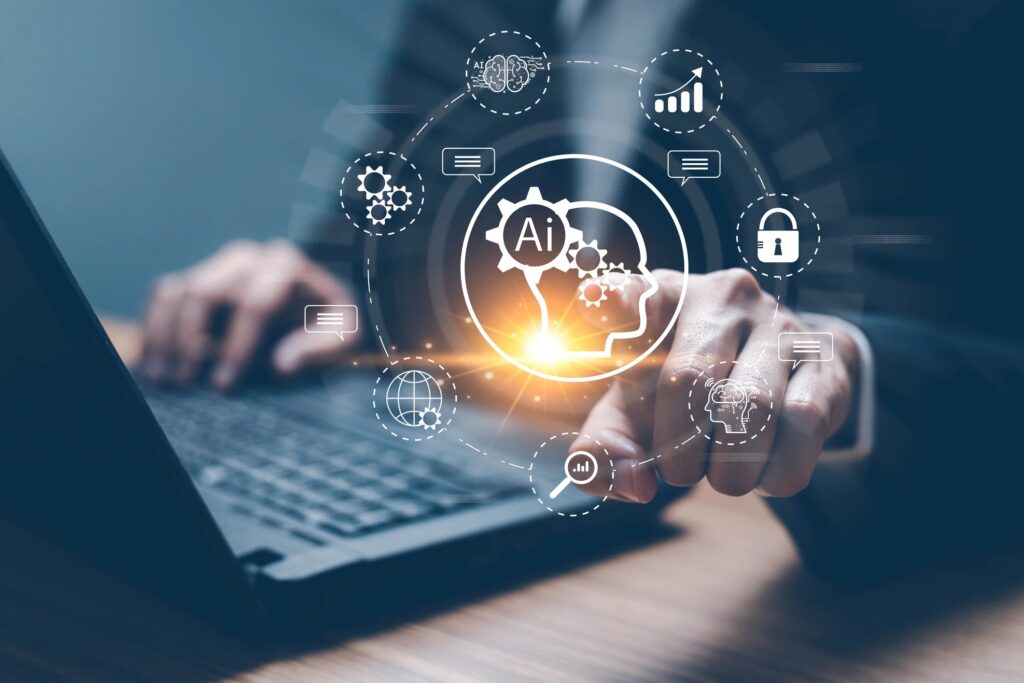
By 2026, artificial intelligence is no longer just an automation engine, but rather an entire decision engine. It’s not only about increasing the speed of processes; it’s also about increasing the speed at which you make decisions. In the context of marketing Strategies for 2026, AI is becoming central to how brands analyze, plan, and execute campaigns with precision and agility.
Today, the capabilities of today’s AI tools include being able to take large amounts of data and break it down to expose hidden patterns as well as provide highly precise targeting and personalized offers on a large scale. Examples of how much artificial intelligence has changed modern marketing include AI based customer service chatbots that provide solutions to very complex customer problems, as well as assisting with and improving the optimization of marketing content—making AI a driving force behind smarter marketing Strategies for 2026.
Hyper-Personalized Content Marketing Strategy 2026
Generic content is invisible content. A winning content marketing strategy 2026 hinges on hyper-personalization. This goes beyond inserting a first name in an email. It involves:
Micro Segmentation: Creating groups of individuals based on their actual behavior and intent signals to better understand your users.
Behavioural Email Marketing involves sending emails based on whether a user takes action (or doesn’t take action) on your website or mobile app.
Dynamic Website Content is the ability to create a highly personalised web page for every visitor (message, images and offer the visitor sees are relevant to that particular visitor).
Social Media Marketing Trends 2026
Social media continues its evolution from a broadcasting platform to an entertainment and discovery engine. The key social media marketing trends 2026 center on authenticity and community. The “post-trend era” has arrived, where chasing viral memes signals short-term thinking . Instead, brands are winning with:
Short-Form Video Dominance: Video remains king, with platforms rewarding content that teaches something useful in under 60 seconds.
Creator Collaborations: Partnering with micro-creators who possess deep trust and affinity within their niches is proving far more effective than relying on broad celebrity endorsements.
- Community-Based Marketing: Brands are building and nurturing their own micro-communities where genuine connection and loyalty can flourish away from the chaos of the main feed .
Omnichannel Marketing 2026
Omnichannel marketing 2026 is all about developing a single, cohesive story that connects all of the consumer’s activities together. The Customer Journey is not a tidy, linear progression; rather, it is a chaotic, multi-channel exploration from discovering products on TikTok to scanning a QR code in-store to browsing Amazon at night. The goal is to create a frictionless experience through all of these channels, capturing online and offline data so that the consumer has the same experience and the same message wherever and however he/she chooses to engage with us. Till now we have dissussed Marketing Strategies for 2026 now we will go more in depth to understand how it will give you massive positive imact in your business.
Performance Marketing Strategies
As budgets are scrutinized, performance marketing strategies are becoming more sophisticated. The focus is firmly on ROI, with AI optimizing paid ad campaigns in real-time for maximum conversion. With the decline of deterministic attribution, marketers are turning to new measurement models that blend search-volume lift, causal modeling, and unified intent data . This shift moves the focus from vanity metrics like clicks to provable, in-market intent and tangible business outcomes.
Role of AI in Marketing 2026
The role of AI in marketing Strategies for 2026 can be best described as the ultimate collaborator. This is because it can provide predictive analytics that can forecast customer lifetime value. Also, it can provide sophisticated chatbots that can market to the consumer, taking them from a question to a sale.
Although AI-generated content is no longer new in marketing 2026, its ethical use cannot be overstated, especially in ensuring that it is used to enhance human creativity rather than replace the emotional truth that only human beings can provide. Moreover, AI is no longer just the gatekeeper of discovery; it’s also the gatekeeper of Generative Engine Optimization (GEO), making it a defining force in advanced marketing Strategies for 2026.
How Small Businesses Can Prepare for 2026 Marketing Trends

As we approach the year 2026, it is important to know that you do not need a huge amount of money to compete in the marketplace successfully. Here are some tips to help get ready to compete:
AI Tools That Are Affordable: There are many different types of AI tools that can help writers create a blog, plan their social media outreach, use email marketing to send out information via email and more. Generally speaking, these types of tasks will take longer than anticipated but because of the advances in technology today, they will be faster and simpler to complete than they once were.
Create a Step-by-Step Preparation Strategy:
- Perform a Data Audit: Ensure that you update and improve your existing customer database and gather new first-party data via preference centres, including interactive content.
- Create the “Intent Matrix”: Gathering information about the primary types of inquiries customers have at each different phase during their purchasing cycle.
- Repurpose Relentlessly: Create one piece of “core” content and repurpose it into a blog post, a video, social snippets, and an email.
- Balance Brand and Performance: Don’t sacrifice long-term brand building for short-term performance gains. Your unique story and perspective are your only true differentiators in an AI-saturated world.
- Upskill Your Team: Invest in training your team on how to “direct” AI agents and interpret the insights they generate.
Common Mistakes to Avoid in 2026 Marketing
- Over-automation: Removing the human touch from customer interactions can make your brand feel cold and impersonal. AI should handle the load so humans can handle the connection.
- Ignoring Data Privacy: Failing to be transparent about data usage is a fast track to losing customer trust .
- Depending Only on Paid Ads: As ad costs rise and tracking becomes more complex, a diversified organic strategy is non-negotiable.
- Not Building Brand Trust: In an era of AI-generated content and deepfakes, a brand that stands for something real and authentic has a powerful competitive advantage .
Conclusion
The marketing Strategies for 2026 require a significant shift in mindset. It’s a shift from push to pull. It’s a shift from impressions to intent. It’s a shift from demographics to individuals in micro-communities. It’s a shift from fearing AI to using AI as a tool.

The winners in this new world are the marketers who begin planning now. The winners are the marketers who invest in data quality, innovation in formats, and authentic human stories that no computer program can replicate. The future of marketing isn’t about the technology. It’s about using the technology to think better, to connect better, and to create something that lasts. The time to prepare for stronger marketing Strategies for 2026 is now. In this blog we have discussed Best Marketing Strategies for 2026.
FAQs-Marketing Strategies for 2026
1. What are the most important marketing strategies for 2026?
We will create a strongly Intent Driven Organization, by utilizing AI to provide each individual consumer an individualized product in order to provide them with an individual seamless purchasing experience, create a community based on trust and collaboration, and allow access of our content to both humans and computers.
2. How will AI impact digital marketing in 2026?
AI is no longer going to be a task executor but a strategic decision-maker. It is going to be used for predictive analytics, complex campaign management, and as a gatekeeper for brand discovery through AI search and shopping assistants. Its proper utilization is going to be a major source of competitive advantage.
3. Is content marketing still effective in 2026?
Yes, but the definition of “content” has changed. It’s no longer about volume but about value and relevance. Successful content is hyper-specific, interactive (quizzes, tools), and opinionated. It must be designed to be repurposed across formats, from short-form video to in-depth guides, to meet audiences wherever they are .
4. How can small businesses prepare for future marketing trends?
Develop a first-party data business strategy as part of your marketing Strategies for 2026 by collaborating with surrounding communities, providing an on-brand customer experience and creating a unique target audience. Use various types of freely available new technology for AI to assist with reusing and re-purposing materials created by AI to strengthen your marketing Strategies for 2026. Eliminate positions and spend all of your time on creative and strategic aspects of developing real relationships with second and third parties in their local communities under a forward-thinking marketing Strategies for 2026 approach.